
Strategic Vision
Strategic Vision
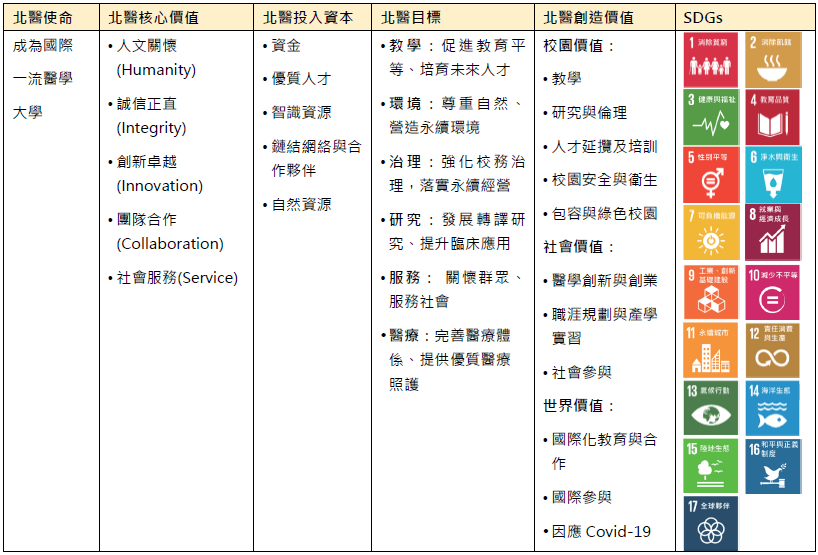
北醫核心價值
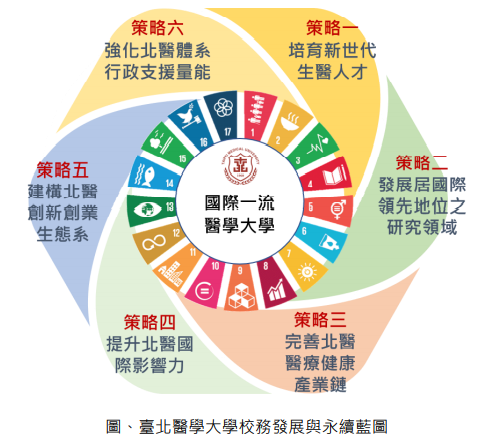
六推動組策略
 01
01教學組
Teaching▪ 建置通識串接專業的USR學習地圖
▪ 鼓勵學生發展自主SDGs專案,養成公民意識
 02
02治理組
Governance▪ 落實員工福祉,確保職場平權,培育永續經營
▪ 校務發展與專業特色結合SDGs,發展實踐社會影響力
 03
03環境組
Environment▪ 職場健康促進
▪ 推動綠色採購、廢棄物管理、減塑政策、再生能源使用
▪ 增加成立與氣候變遷或永續發展相關的學生社團數量 04
04研究組
Environment▪ 推動精準健康研究,促進健康醫療
▪ 結合雙和生醫園區,打造生醫產業聚落
▪ 促進衍生新創,營運北醫國際產學聯盟,推動產學國際化
 05
05服務組
Serve▪ 完善經濟及文化不利與身心障礙學生安心就學環境
▪ 優化經濟及文化不利與身心障礙學生多元學習力
▪ 弱勢族群支持性扶助- 06
醫療組
Medical▪ 完善各醫療活動與SDGs聯結及推動校院連結與社區參與
▪ 推廣USR概念、深化SDGs知能
▪ 參與國際醫療與援助活動
北醫SDGs策略
| SDGs目標 | TMU 回應做為 | |
| SDG 1終結貧窮 | 1.3 對所有的人,包括底層的人,實施適合國家的社會保護 制度措施,到了西元 2030 年,範圍涵蓋貧窮與弱勢族群。 | ▪ 完善經濟及文化不利與身心障礙學生安心就學環境 |
| SDG 2終結飢餓 | 2.2 在西元 2030 年前,消除所有形式的營養不良。 | ▪ 提供經濟不利學生膳食補助 ▪ 學童營養教育教學,建立生鮮食材及全食物概念 |
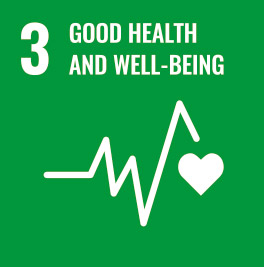
| SDG 3健康與福祉 | 3.8 實現醫療保健涵蓋全球(以下簡稱 UHC)的目標,包括財務風險保護,取得高品質基本醫療保健服務的管道, 以及所有的人都可取得安全、有效、高品質、負擔得起的基本藥物與疫苗。 | ▪ 推動精準健康研究,促進健康醫療 ▪ 身心健康與福利 ▪ 推動校院連結與社區參與 ▪ 發展社會服務隊與服務學習 ▪ 國內外醫療與衛教 |
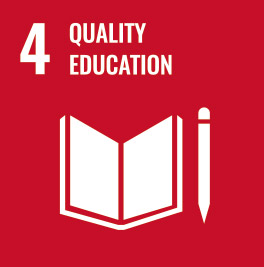
| SDG 4優質教育 | 4.1 在西元2030年以前,確保所有的男女學子都完成免費的、公平的以及高品質的小學與中學教育,得到有關且有效的學習成果。 4.3 在西元 2030 年以前,確保所有的男女都有公平、負擔得起、高品質的技職、職業與高等教育的受教機會,包括大學。 4.5 在西元2030年以前,消除教育上的兩性不平等,確保弱勢族群有接受各階級教育的管道與職業訓練,包括身心障礙者、原住民以及弱勢孩童。 4.7 在西元 2030 年以前,確保所有的學子都習得必要的知識與技能而可以促進永續發展,包括永續發展教育、永續生活模式、人權、性別平等、和平及非暴力提倡、全球公民、文化差異欣賞,以及文化對永續發展的貢獻。 4.a. 建立及提升適合孩童、身心障礙者以及兩性的教育設施,並為所有的人提供安全的、非暴力的、有教無類的、以及有效的學習環境。 | ▪ 提供永續與創新教學 ▪ 提供多元輔導機制(如針對身心障礙學生設置資源教室) ▪ 執行USR計畫 ▪ 與校外教育單位和服務團體合作開設服學課程 ▪ 提供社會多元化的學習進修管道 ▪ 提供職涯規劃與產學實習 ▪ 國際化教育與合作 |
| SDG 5性別平等 | 5.1 消除所有地方對婦女的各種形式的歧視。 | ▪ 建立兩性平權校園環境,確保職場平權 |
| SDG 6淨水與衛生 | 6.4 在西元2030年以前,大幅增加各個產業的水使用效率, 確保永續的淡水供應與回收。 6.b. 支援及強化地方社區的參與,以改善水與衛生的管理。 | ▪ 節約用水,漏水查報、校舍供水系統汰舊換新;污廢水處理,生活污水與實驗室廢(污)水採取分流處置 ▪ 開設服學課程-流行病學調查團,協助地方改善水與衛生管理 |
| SDG 7可負擔與潔淨能源 | 7.3 在西元 2030 年以前,將全球能源效率的改善度提高一倍。 | ▪ 實施能源管理 |
| SDG 8尊嚴勞動與經濟成長 | 8.6 在西元 2020 年以前,大幅減少失業、失學或未接受訓練 的年輕人。 8.8 保護勞工的權益,促進工作環境的安全。 | ▪ 重視員工身心健康與福利;培育中高階管理經營人才 ▪ 打造教職員安全衛生職場 |
| SDG 9產業、創新與基礎建設 | 9.5 改善科學研究,提高所有國家的工商業的科技能力。 9.b. 支援開發中國家的本國科技研發與創新,包括打造有助工商多元發展以及商品附加價值提升的政策環境。 | ▪ 成立北醫國際產學聯盟,致力生醫產業發展 |
| SDG 10消弭不平等 | 10.2 在西元 2030 年以前,促進社經政治的融合,無論年齡、性別、身心障礙、種族、人種、祖國、宗教、經濟或其他身份地位。 | ▪ 建立平等校園,提供弱勢族群支持服務 |
| SDG 11永續城市與社區 | 11.7 在西元 2030 年以前,為所有的人提供安全的、包容的、可使用的綠色公共空間,尤其是婦女、孩童、老年人以及身心障礙者。 | ▪ 加強師生環境永續使用概念,將綠能環境概念導入校園 |
| SDG 12責任消費與生產 | 12.2 在西元 2030 年以前,實現自然資源的永續管理以及有效率的使用。 12.5 在西元 2030 年以前,透過預防、減量、回收與再使用大幅減少廢棄物的產生。 | ▪ 加強師生環境永續使用概念,將綠能環境概念導入校園 |
| SDG 13氣候行動 | 13.3 在氣候變遷的減險、適應、影響減少與早期預警上,改善教育,提升意識,增進人與機構的能力。 | ▪ 低碳校園,實施能源管理 ▪ 綠色採購 |
| SDG 14海洋生態 | 14.1 在西元 2025 年以前,預防及大幅減少各式各樣的海洋污染,尤其是來自陸上活動的污染,包括海洋廢棄物以及營養污染。 | ▪ 處理污水放流均符合現行放流水標準後排放至衛生下水道 |
| SDG 15陸地生態 | 15.9在西元2020年以前,將生態系統與生物多樣性價值納入國家與地方規劃、發展流程與脫貧策略中。 | ▪ 維護校園生物多樣性,保護校園生態系統。 |
| SDG 16和平正義與公正制度 | 16.b. 促進及落實沒有歧視的法律與政策,以實現永續發展。 | ▪ 法治教育推廣(如智財、審議民主人才培訓) |
| SDG 17永續發展夥伴關係 | 17.6 在科學、科技與創新上,提高北半球與南半球、南半球與南半球,以及三角形區域性與國際合作,並使用公認的詞語提高知識交流。 | ▪ 自製優質磨課師課程 ▪ 拓展與全球盟校之學術交流 ▪ 參與國際醫療與援助活動,培育國外醫事人員 |